

Who was Europa ? A continent bearing the name of a kidnapped girl ; that is the founding myth of Europe. Europa, a Phoenician princess from the city of Sidon, was carried across the Mediterranean by a god disguised as a bull. Her story is one of the oldest in the Western tradition, and it raises a question that remains uncomfortable: does Europe begin with an abduction, or with a crossing?
The Myth of Europa and Zeus
The myth appears in its most complete form in the Metamorphoses of Ovid, and in earlier fragments attributed to Hesiod and the Homeric tradition. Europa was the daughter of Agenor, king of Phoenicia ; a territory corresponding roughly to modern-day Lebanon. She was gathering flowers on the seashore with her companions when Zeus, king of the Olympian gods, saw her and desired her.
Zeus transformed himself into a magnificent white bull, approached the group without alarm, and won Europa’s trust by his gentleness. She climbed onto his back, and he immediately plunged into the sea, carrying her westward across the waves. She arrived on the island of Crete, where Zeus revealed his true nature. Europa bore him three sons: Minos, Rhadamanthus, and Sarpedon ; names that would become central to Greek legend.
Minos became king of Crete and gave his name to the Minoan civilisation, the earliest advanced culture of the Aegean. The myth, in other words, places the origin of the first European civilisation in the union between a Phoenician woman and a Greek god ; a founding gesture of cultural hybridity.
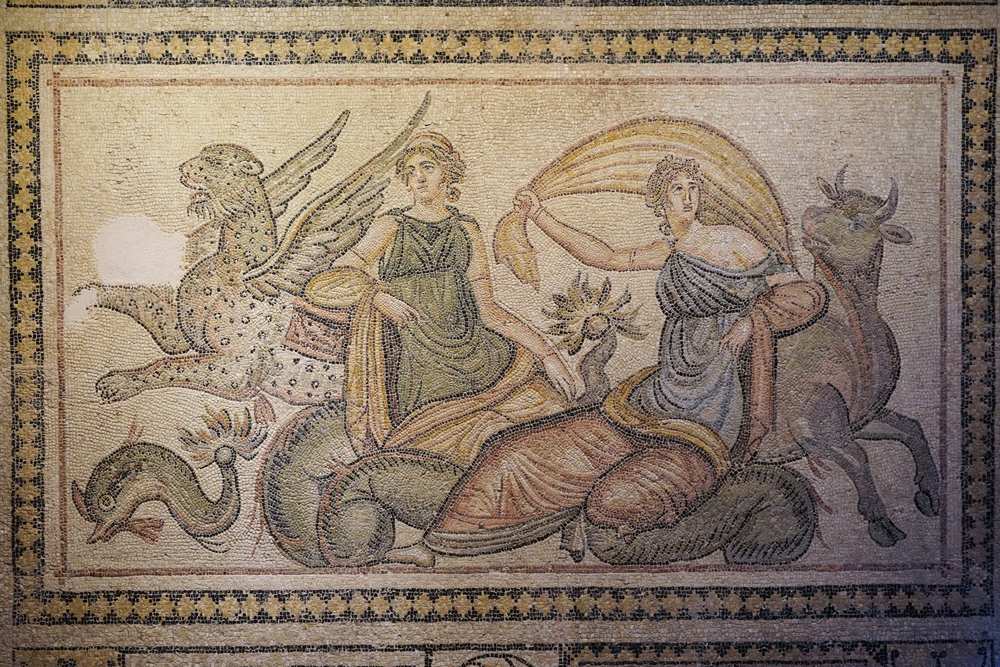
Mosaic depicting Europa and Zeus as a bull, Europa Greek mythology
The Origin of the Name Europe
Etymologists have debated the name Europa for centuries without reaching consensus. Two principal theories exist. The first derives the name from the ancient Greek eurys (εὐρύς), meaning “broad” or “wide,” and ops (ὤψ), meaning “eye” or “face” ; giving something close to “broad-gazing” or “wide-eyed.” The second theory traces the name to a Semitic root, specifically the Akkadian erebu, meaning “sunset” or “the land where the sun sets” ; which would make Europe, etymologically, the West.
The second theory carries geopolitical weight. If Europe’s name derives from a Semitic word for the setting sun, then the continent was named by people looking westward from the East ; by Phoenicians, Babylonians, or other Near Eastern civilisations who experienced Europe as the horizon beyond the sea. Europe was a Western direction before it was a continent.
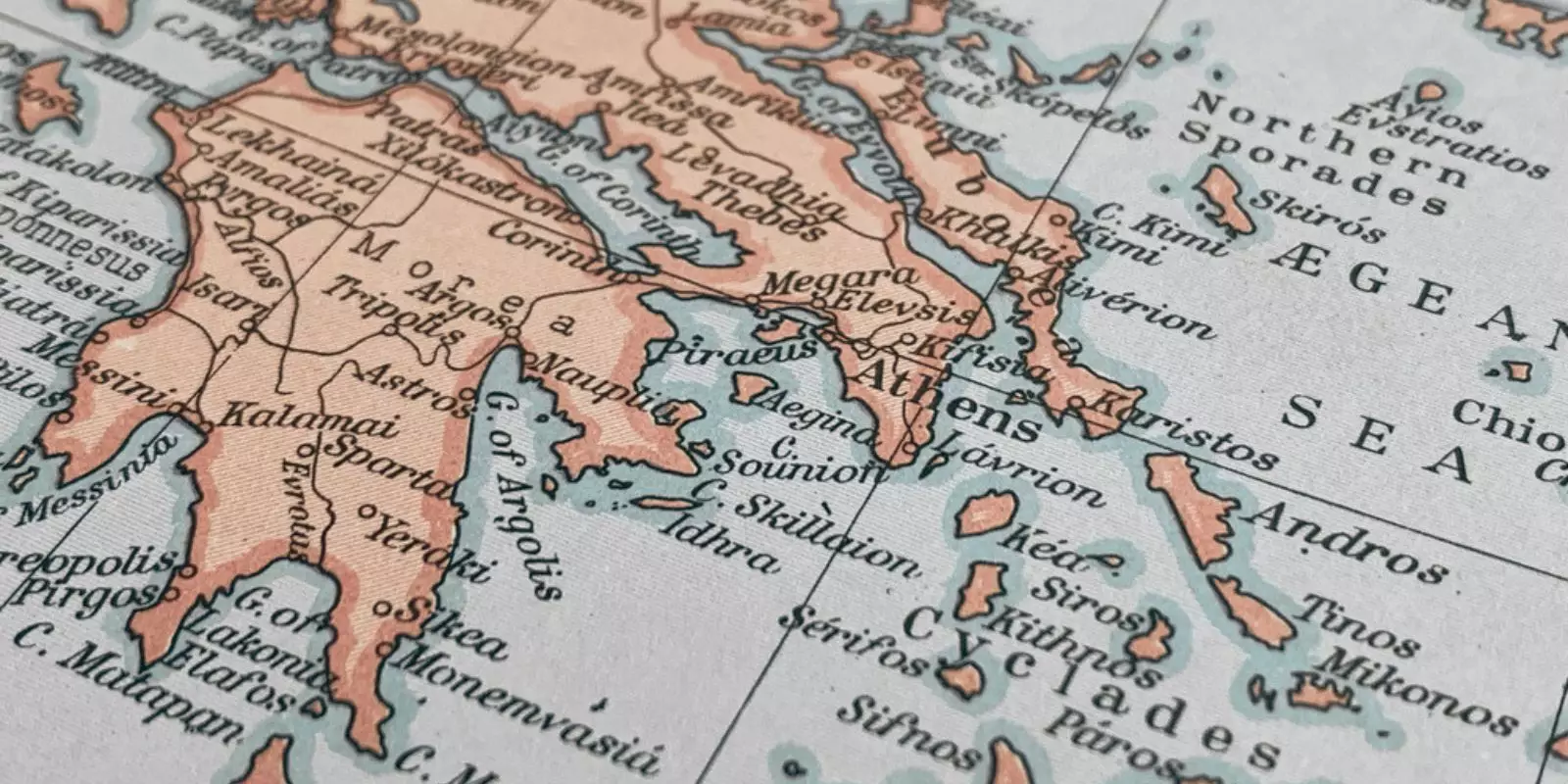
The Greeks initially used “Europa” to designate the landmass north of the Aegean. The term gradually expanded to cover the full continental territory as Greek geographical knowledge grew through trade and colonisation. By the time of Herodotus in the fifth century BCE, Europe was already conceived as one of the three parts of the known world, alongside Asia and Libya.
Why Europa Was Phoenician
The detail that Europa came from Phoenicia is rarely treated as incidental by scholars of the myth. Phoenicia was the Mediterranean’s great commercial civilisation ; the inventor of the alphabet that would become the foundation of Greek, Latin, and all Western scripts. The Phoenicians were the maritime network of the ancient world, planting colonies from Carthage to Cádiz, connecting the shores of a sea that would later be called mare nostrum.
For Europa to be Phoenician is for Europe’s founding figure to arrive from the East, carrying with her the seeds of a civilisation older than Greece. The myth encodes a historical truth: the culture that would become European drew its deepest roots from the ancient Near East. Alphabet, mathematics, astronomy, and agriculture all moved westward across the Mediterranean before Greece synthesised them into what we now call Western civilisation.
Europa in Art and Symbol
The myth of Europa has produced some of the most recognisable images in Western art. Titian painted The Rape of Europa around 1560 – 1562, now held at the Isabella Stewart Gardner Museum in Boston ; a work that Rubens later copied and that Velázquez studied. The scene of a woman carried by a bull across the waves became a standard of the European Baroque.
The image persists in the modern visual language of Europe itself. Europa appears on the Greek two-euro coin. A mosaic of Europa and the bull decorates the floor of the European Council building in Brussels. The European Central Bank incorporated her portrait into the security features of the euro banknotes issued from 2013 onward ; taken from a fifth-century BCE Greek vase held at the Louvre.
The choice is deliberate. European institutions did not select a map, a flag motif, or an abstract symbol as their founding image. They selected a woman ; a Phoenician woman, carried westward by a god ; as the face on their currency. [VERIFY: exact placement of Europa’s image on ECB banknotes post-2013 series]
What the Myth Says About European Identity
The myth of Europa resists simple nationalist readings. She is not Greek. She does not come from the continent that will bear her name. She arrives from the East, and the civilisation she helps found ; Minoan Crete ; precedes classical Greece by a thousand years. Europe, in its founding story, is a destination, a synthesis, a crossing point.
This is precisely what makes the myth durable and generative. European identity, at its origin, is defined by movement across the sea, by encounter between cultures, by the transformation that results from that encounter. The continent was named for a foreigner who became a founder. That paradox sits at the heart of the European project ; and it is worth holding on to, especially when that project is under pressure from those who would reduce Europe to a fortress of cultural purity.
The bull carried Europa westward. What she brought with her shaped everything that followed.
| Origin | Phoenicia (modern Lebanon) |
| Myth type | Greek mythology, founding myth |
| Key figures | Europa, Zeus, Minos, Agenor |
| Location | Sidon (Phoenicia) → Crete |
| Legacy | Name of the European continent [[;]] Minoan civilisation [[;]] Euro banknote portrait |
Stay informed. Stay sovereign.
Europa Maxima’s newsletter delivers geopolitical analysis directly to your inbox ; no algorithm, no filter.
Subscribe to Europa’s First Column →