On February 28, 2026, the United States and Israel launched a war on Iran. 56 days later, the Strait of Hormuz, where 20% of the world’s oil flows, remains under contested control. Over 80 energy facilities throughout the Middle East have been devastated. A naval blockade is strangling Iranian exports. Global oil markets are in the worst disruption in recorded history. And somewhere in that wreckage, a small number of entities are posting record revenues.
This article documents who they are, how they were positioned, and what the infrastructure of that positioning looks like. The evidence is in SEC filings, OPEC secretariat data, congressional oversight letters, and market records. The argument builds from the war zone outward. From the pattern of destroyed OPEC states to the clearing of the GCC infrastructure, to the financial architecture. Which was already in place when the clearing began.
The question at the center of it is simple.
In the worst energy crisis in recorded history, who benefits from Trump’s Iran War?
I. Trump’s Iran War and the IEA.
On April 8, the head of the IEA stood at the Atlantic Council and described the destruction of 80+ energy facilities across the Middle East since February 28 and a repair bill of at least $34 billion. He called it the worst energy security crisis in recorded history.
That count covers the war zone, but it does not cover Romania, Hungary, Texas, Washington State, Australia, India, or Russia. When you add those, at least one significant energy infrastructure incident has occurred every seven to eight days since February 28, across every inhabited continent, hitting production, refining, distribution, and grid infrastructure simultaneously.
Global crude throughputs have been cut by approximately 6 million barrels per day in April. Global oil inventories fell 85 million barrels in March; the sharpest monthly drop since COVID-19.
II. What’s Happening to OPEC?
The answer requires a look at history.
Nigeria peaked at 2.5 million barrels per day, its sector dominated by Shell since the 1950s, its most prominent activist executed by military tribunal in 1995, production now struggles to sustain 1.5 million.
Venezuela produced 3.4 million barrels per day in 1998. After a U.S.-backed strike gutted PDVSA’s workforce in 2003 and sanctions blocked diluent imports in 2019, production collapsed to 830,000 barrels per day. In February 2026, the U.S. military extracted President Maduro. Trump announced he would take the oil.
Libya was a founding OPEC member producing over 1.5 million barrels per day before the 2011 NATO intervention. It has not recovered.
Iraq, invaded in 2003, cannot export its own oil without U.S. permission over the Strait of Hormuz, the same strait the U.S. naval blockade is currently choking.
Three of OPEC’s five founding members are destroyed, collapsed, or at war. The remaining two, Saudi Arabia and Kuwait, are U.S. client states. The institution built to give resource-producing nations collective leverage over industrial powers has been systematically cleared across two decades.
Iran was the last holdout. So, Trump started a War on Iran.
III. U.S. Plan: Iran Vs. GCC.
Those two U.S. client states did not passively host this war. Saudi Arabia reported to OPEC that it ramped up crude production 8% in February; the month the war began. VLCC charter rates reached $93,000–$105,000 per day before the first strike, the highest in decades, indicating markets had already priced in the disruption. Carnegie Endowment noted that GCC states publicly distanced themselves from U.S. and Israeli action “despite suggestions of private rhetoric to the contrary.” Every GCC state hosts U.S. military bases. Nothing takes off from sovereign soil without government knowledge.
Qatar’s former prime minister Sheikh Hamad bin Jassim said it publicly on March 2:
“There are forces that want the Council’s states to become directly embroiled with Iran. A direct clash will deplete the resources of both sides and provide an opportunity for many forces to control us.”
Qatar’s own QatarEnergy CEO had repeatedly warned U.S. officials about the risk of provoking Iran. Iran had stated in writing that energy facilities in countries hosting U.S. bases would be “lawful targets” if its own infrastructure was struck.
Israel struck Iran’s South Pars gas field on March 18, anyway. Since then, the U.S. and Israel have struck multiple power plants, oil infrastructure, and civilian infrastructure.
So, Iran retaliated against every host state within hours of each strike. The UAE’s only Hormuz bypass pipeline was destroyed. Qatar’s Ras Laffan LNG facility, 17% of global LNG supply, sustained $20 billion in damage with a five-year repair timeline. Bahrain intercepted 466 drones and 188 ballistic missiles by Day 37. Many got through.
Hormuz in The Middle.
The Strait of Hormuz carries one-fifth of the world’s oil. Its closure was framed as an Iranian act of aggression requiring resolution. The U.S. simultaneously imposed a naval blockade of Iranian ports, compounding the closure, while demanding Iran reopen the strait.
Trump threatened to bomb Iranian power plants if Hormuz was not opened by April 6. Iran’s parliament speaker responded that Iranian power plant strikes would render energy infrastructure across the region “irreversibly destroyed.” The Trump War on Iran is still declared. The blockade remained. Hormuz remained closed. Every day it stayed closed, U.S. shale producers and LNG exporters filled the gap at prices set by a disruption Washington had the power to ease and chose not to.
ADNOC CEO Sultan Al Jaber called it “global economic warfare.” The supply gap was created with full knowledge of what would fill it.
IV. The Front buried in the back pages.
In 2015, former CIA Director Michael Hayden said publicly that the most effective method used to stop Iran’s nuclear program had been the assassination of its scientists, more effective than sanctions, cyberattacks, or airstrikes.
Destroying a facility sets a program back years. Eliminating the people who built it sets it back decades. Since 2007, at least 10 Iranian nuclear scientists were killed in targeted operations before the June 2025 strikes destroyed Fordow, Natanz, and Isfahan. Western intelligence has consistently attributed the campaign to Mossad.
A structurally parallel pattern is now under active FBI investigation in the United States, and the cases connecting to the energy transition this war accelerated are specific.
The Scientists.
Nuno Loureiro, Director of MIT’s Plasma Science and Fusion Center and the world’s leading authority on magnetic confinement fusion, was shot at his home on December 15, 2025, and died the following day. Two days later, Trump Media announced its merger with TAE Technologies, the world’s leading private fusion company, backed by Google and Chevron; whose primary academic competition is MIT’s Plasma Science and Fusion Center.
Monica Reza, co-inventor of Mondaloy — the Air Force-funded nickel superalloy built into America’s national security launch vehicles — vanished from a hiking trail in June 2025. She had a documented professional relationship with Maj. Gen. Neil McCasland, who oversaw the Air Force Research Laboratory that funded her work, and who disappeared from his Albuquerque home on February 27, 2026 — one day before the war began.
Joshua LeBlanc, NASA engineer leading the DRACO nuclear thermal propulsion program, died in a fiery Tesla crash in July 2025 after leaving his phone and wallet at home; his vehicle was logged at Huntsville International Airport for four hours before the crash.
Steven Garcia, a contractor at the Kansas City National Security Campus — which manufactures the precision electronics and systems integration components for nuclear weapons using the same engineering disciplines required to build fusion hardware — disappeared in August 2025.
The House Oversight Committee has formally requested briefings from the FBI, DOE, DOD, and NASA. Energy Secretary Chris Wright confirmed a coordinated multi-agency investigation.
Physical infrastructure can be rebuilt, but the knowledge these people carried cannot.
V. Already Positioned to Profit
With the supply gap open and the human capital that might have complicated what came next gone from the field, the financial record shows what was already in place before the Trump decided to go to war on Iran.
U.S. shale producers: ExxonMobil, Chevron, ConocoPhillips, are posting record revenues with Brent crude approaching $100 per barrel. U.S. LNG exporters are supplying Europe at wartime premiums.
GE Vernova, whose products generate approximately 25% of the world’s electricity, reported Q1 2026 earnings that beat analyst expectations by a significant margin, raising full-year forecasts and jumping 12.1% on the day. Every major nuclear company has been re-rated since February 28 — the technology did not change; the alternative caught fire.
The Trump Media merger with TAE Technologies was filed with the SEC on December 18, 2025; 71 days before the Trump struck the Minab school in Iran and the war began.
The BBC documented five trading spikes in oil futures occurring minutes before major Trump announcements related to the conflict. On Polymarket — where Trump Jr. is an investor — six accounts created in February 2026 all bet on an Iran strike by February 28, collecting $1.2 million.
The White House sent an internal email warning staff against using insider information for prediction market bets. The reconstruction pipeline is already running with Chevron positioned for Venezuela’s PDVSA rebuild, a $20 billion expansion of Qatar’s Ras Laffan underway, and Trump’s “Board of Peace” in active communication with DP World about Gaza port construction and a free trade zone.
Black Rock, Vanguard, and State Street.
BlackRock manages over $10 trillion. Vanguard manages over $9 trillion. State Street manages $4.3 trillion.
The three firms are top institutional shareholders in the oil companies posting windfall profits, the defense contractors executing the campaign, and the nuclear and fusion companies receiving the capital flowing when the oil order concludes; simultaneously, across every phase.
BlackRock CEO Larry Fink has written annual letters demanding net-zero commitments since 2018 while holding major positions in all of the above. Owning the weapon, the wounded, and the hospital means every scenario produces revenue.
Aligned structural interests produce aligned outcomes, and the ownership is the mechanism.
VI. The Price: What Comes Next?
The mechanism has a human cost, and it is being paid unevenly.
As far as we know, Europe didn’t choose this restructuring. The Romania and Hungary refineries that exploded on the same day in October 2025, both Russian-linked, both under investigation, both preceding the war, were the opening act.
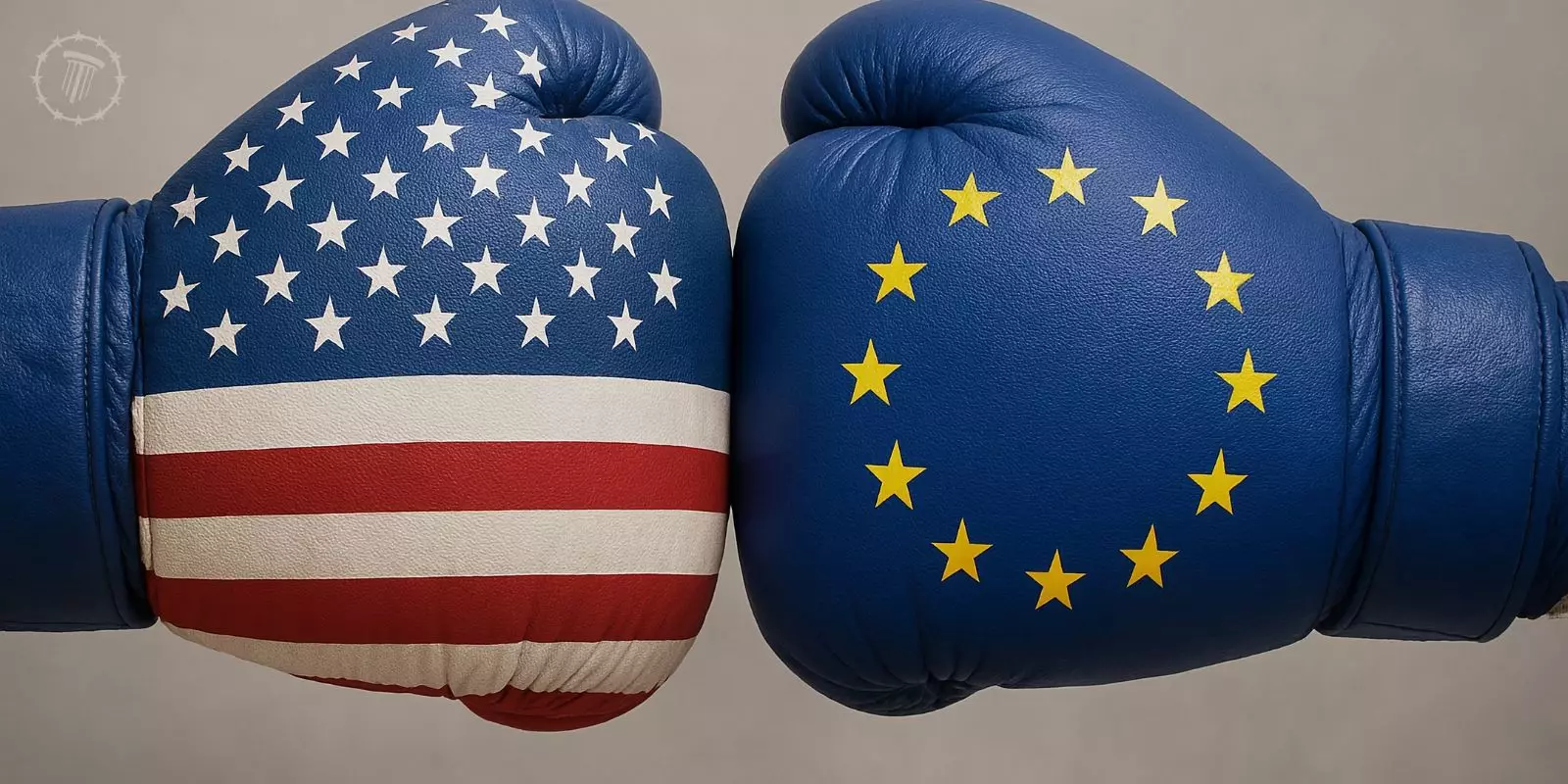
Since February 28, Europe has turned to U.S. LNG at wartime premiums as Middle Eastern supply collapsed. The European Commission launched an $86 billion clean energy strategy in direct response. The energy dependency on the United States that Washington spent decades pushing for was achieved through the destruction of every alternative.
World Hunger?
The toll extends further. The World Food Programme warned that the war on Iran could push food-insecure people globally to 363 million, up from a pre-war baseline of 318 million, with rising energy costs driving food prices higher across low-income countries. 110 billion cubic meters of LNG exports, 19% of global LNG trade, have been disrupted since February 28.
Sudan, which imports more than half its fertilizers via the Persian Gulf’s sea routes, is rerouting food shipments through the Red Sea at significantly higher cost. Gaza food prices are 85% higher than before the war. The populations of Iran, Lebanon, Iraq, Gaza, and the broader region are absorbing the strikes, burying the dead, and watching their infrastructure burn. They were not consulted about the next world being constructed above their heads.
The energy transition being forced at wartime speed is responding to a climate crisis that was already an emergency. The oil order being dismantled was always going to end. Nuclear power is cleaner than what it replaces. Fusion, if TAE or MIT’s program delivers, could power civilization without carbon for centuries. The price being extracted to get there is devastating, unevenly distributed, and arguably unnecessary — there were other paths. Whether the destination justifies the route is a question each reader has to answer.
VII. The World Being Built.
Trump posted on Truth Social on Day 35 of the Iran war:
“OPEN THE HORMUZ STRAIT, TAKE THE OIL, & MAKE A FORTUNE.”
He published the strategy. The SEC filings, the merger announcement 71 days before the war, the trading spikes minutes before Trump’s press conferences, the reconstruction contracts negotiated before the ceasefire — they are all in the public record. OPEC is not reconstituting. Saudi Arabia is asking Washington to ease a naval blockade it helped make possible. The institutional architecture that owned the old energy order is building the new one.
Every power that tried to reshape the Middle East by force produced the same result: the destruction was achievable; what filled the space afterward was not. The British drew the borders. The Americans propped up the monarchies. The neoconservatives ran shock and awe through Iraq in 2003. The seeds of the next disruption are planted in the conditions of this one; and the populations who had no say in this transition have, historically, found ways to make that absence felt.
The next world is already being built. It may be cleaner, more efficient, and less dependent on the politics of a single strait. But it is being built on the rubble of the old one, by the same hands that profited from it, at a cost borne by those who had no vote. That is the war we are living through right now. And there is, somewhere in that contradiction, the shape of something better, if the people paying the price ever get a seat at the table being built above their heads.